Trust is our character...
 Chola Organic Certifications Pvt Ltd Chola Organic Certifications Pvt Ltd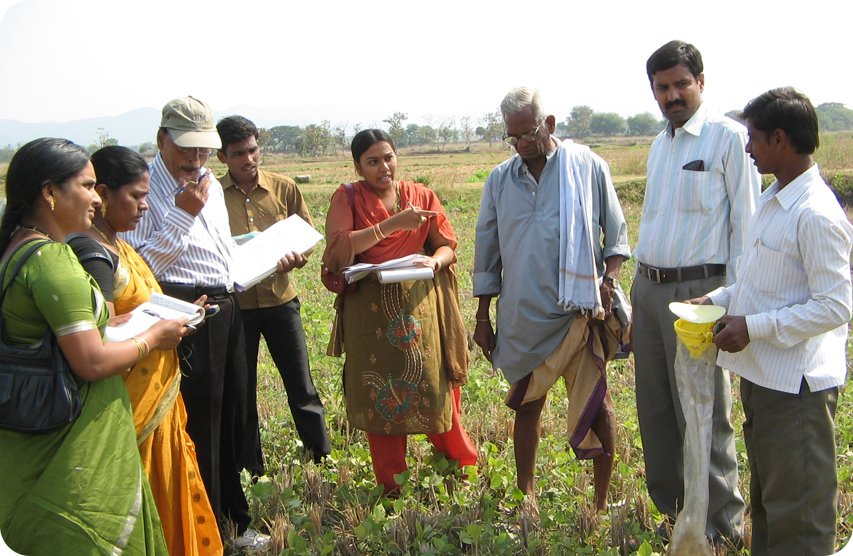
Small land holders who are residing in villages which are in close proximity can join together and apply for organic certification as a group. The advantages of group certificate are as follows::
Minimum requirements to form the Grower Groups:
Internal control system of Grower groups.
Internal control system or ICS means it is a documented quality assurance system. Based on this ICS the external certification agency delegates the annual inspection of individual members to the responsible office bearers of the registered group.
The ICS coordinator of the group will appoint an internal advisor and an internal inspector. The advisor will regularly visit each member’s farm and advise them and train them on organic practices. He is also responsible for updating the farm diary and other documents that are kept by the farmers in the Group.
The internal inspector will inspect 100% of all the farms in the group twice in a year and record his observations during the inspection. He will fill up an internal inspection checklist and submit it to the ICS approval officer.
The approval officer will go through the report and if he finds any non compliances he will ask the individual farmer to correct it. If the non compliance is a major one, suitable sanctions are imposed and action taken accordingly. Where there are no issues, he will recommend for approval of the farmers to the ICS coordinator.
Submission of approved farmers list (AFL) along with organic status of the farmers to the external certification agency by the ICS coordinator.
The ICS coordinator will prepare a statement giving details of the code number of each farmer along with the name, address, total area, organic area, GPS coordinates for the land, date of last application of prohibited substances, the date of internal inspection, the name of the internal inspector, the crop and variety grown and the estimated yield for each crop. He will also mention the organic status of each farmer indicating whether approved or sanctioned.
The ICS coordinator will upload this approved farmers’ (AFL) list to the external certification body for taking up inspection and certification.
On receipt of the AFL, the evaluator in CHOLA will examine all the details and ask for any missing details. If CHOLA is satisfied with all the information, an inspector will be sent to the group for external inspection.
The inspector, on arrival at the group office, will conduct a risk assessment to find out whether there are any risks involved in the organic management practices of the group. Depending on the risk noticed during inspection he will fix a factor. Inspector will calculate the number of farmer samples to be inspected in the group. He will take the square root of the total number of farmers in the group and multiply that number with the risk factor and arrive at sample size. To this number he will add the number of farmers who have more than 4 hectares. That is the total number of farmers to be inspected by the external inspector,
The inspector will also check if the internal inspector had done his job in a correct manner by conducting a witness audit.
The external inspector will re- inspect all the farms selected by him and check whether all of them have complied with the internal standard and for the standard for which the group had applied for certification.
The inspector will verify the farm-map, all the farm diaries of the farmers, input purchase bills and other records like training registers, cleaning register et cetera. He will also visit the grain storage go downs and input storage places and verify whether there is no contamination from non organic and prohibited substances to the organic harvested produce. He will note down the observations in the inspection checklist.
The inspector will also take samples of soil or plant parts for residue analysis if there is any suspicion of contamination.
He will also collect samples of invoices pertaining to organic input purchase for submitting to the CHOLA.
After the inspection is over the inspector will write an inspection report and submit to the CHOLA for their review and action.
The evaluator in the CHOLA will look into the inspection report and other documents to find out whether inspection has been conducted as per the expected norms. If there are any missing details, they will be collected from the operator and submitted to the certification officer.
The certification officer will screen the inspection report and verify If all the standards were followed. The Certificate will be issued to the Group which has complied with all standard requirements.
In case of major non compliances the operator will be informed of the relevant sanctions like denial of certification. If the operator is not satisfied with the certifiers decision he can always approach the appeals committee for redressal.
© 2022 cholaorganics.com All Rights Reserved.